

ICYMI #003
Bernard & Bernard’s Excellent LVMH Surveillance Adventure

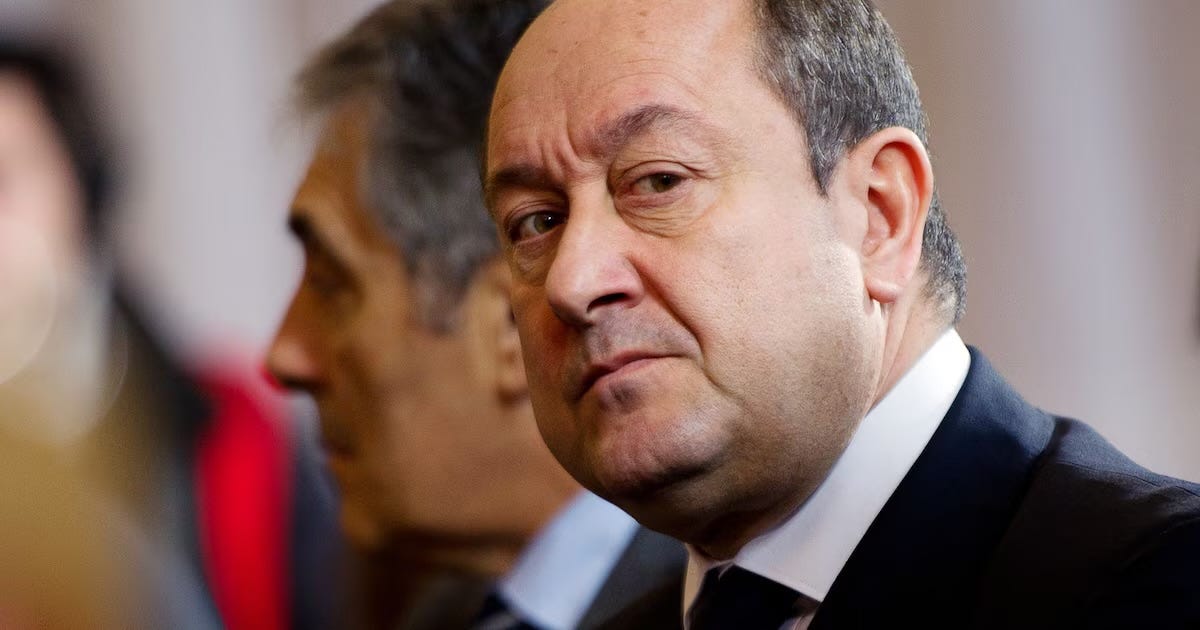
Paris, a city of secrets, woke up to two explosive revelations today—one literal, one political. First, authorities unearthed a 500kg WWII bomb in Saint-Denis, an unsettling reminder that, despite Paris' glamorous image of Fashion Week and its endless café terraces, the past never stays buried for long. And then, in a dramatic twist, Bernard Squarcini, the former head of France's intelligence services, was sentenced for running a corporate espionage operation on behalf of luxury giant LVMH and Bernard Arnault. A relic of war unearthed in the city’s heart, and a modern corporate scandal unraveling in its courts—both reminders that Paris’ history, whether shaped by conflict or wealth, refuses to stay hidden.
As the city processes this day of revelations, it’s impossible to ignore how these events highlight Paris’ ongoing struggle with its own history. Whether it's the lingering shadows of wartime secrets or the corporate intrigues of the French elite, the past continues to echo through the present. In Squarcini’s case, it’s not just espionage, it’s a ruthless, almost archaic, effort to suppress inconvenient truths. And that, in a way, mirrors the age-old tradition of power in France, where the powerful, from monarchs to magnates, will go to any lengths to silence those who threaten their hold.
The Spy in LVMH’s Arsenal
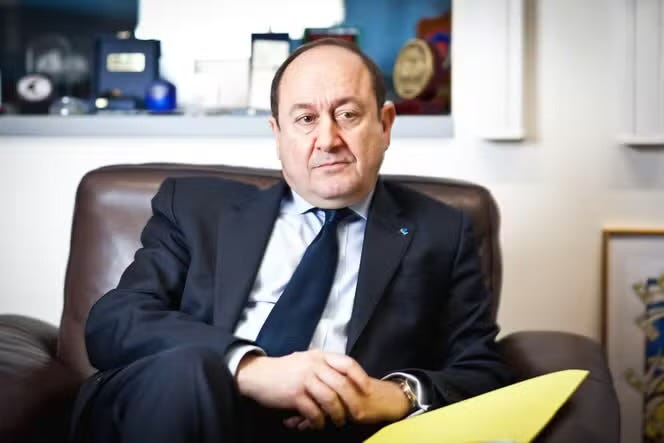
Enter Bernard Squarcini, who, after his service as France's top intelligence chief, transitioned seamlessly into the role of private enforcer for none other than Bernard Arnault, head of LVMH. The former spy, tasked with protecting national security, used his skills to safeguard a corporate titan from, of all things, pesky leftist journalists. This wasn’t your typical cloak-and-dagger affair. Instead, Squarcini’s job was to engage in the murky world of corporate espionage, working behind the scenes to quash any narratives that might tarnish Arnault's gleaming reputation. And yet, in the grand tradition of white-collar justice, Squarcini won’t actually be behind bars. Instead, he’ll serve his firm sentence under an electronic bracelet, which means the biggest inconvenience he’ll face is having to coordinate his house arrest around restaurant reservations. But let’s not get lost in the weeds of sentencing technicalities—because the real scandal here is not just that LVMH hired France’s ex-intelligence chief to do its dirty work, but that this level of corporate paranoia was deployed against Fakir, a scrappy leftist newspaper, and François Ruffin, a journalist-turned-filmmaker who makes Michael Moore look like a Wall Street analyst.
The Billionaire vs. The Banlieue
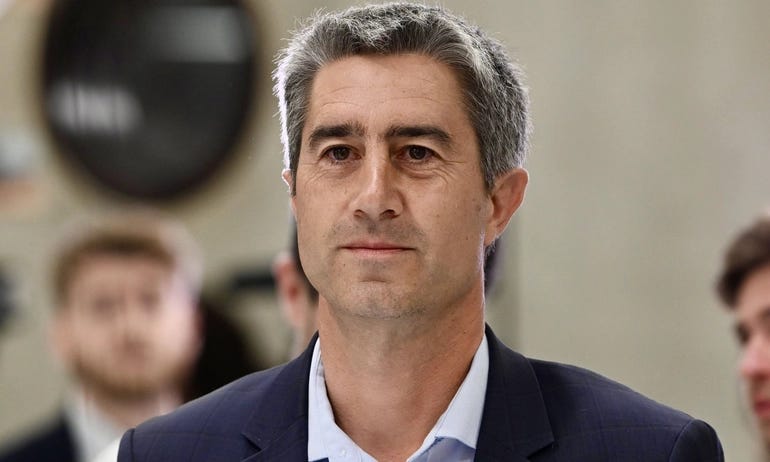
Liz Alderman of the New York Times reports Ruffin first suspected something was amiss while filming Merci Patron!, his 2016 César-winning documentary that mocked Arnault’s ruthless business tactics and LVMH’s habit of treating workers like fast fashion: useful until they’re not. The film became a sleeper hit and struck a chord across France, challenging the power structures that had long entrenched the nation’s elite. The documentary humorously skewered Arnault's vast wealth and business practices, particularly his early days with LVMH, when he bought bankrupt textile company Boussac and promised to keep jobs—only to ruthlessly eliminate thousands of positions and exploit the workers left behind. Ruffin’s documentary resonated with a country deeply sensitive to inequality, tapping into the revolutionary fervor that has simmered since 1789.
Ruffin, who also ran the left-wing satirical journal Fakir, was out here doing the work, gathering the LVMH cast-offs and getting Arnault to admit to the human toll of his corporate cannibalism. The man wore an “I Love Bernard!” T-shirt like he was the best friend of a French reality TV villain. Oh, and he didn’t just settle for dry talking-heads or somber interviews—oh no, he did it with slapstick antics, like a one-man comedy show with a side of activism. The cherry on top? Ruffin attempted to get compensation for a couple who’d been left destitute when LVMH packed up their textile production and shipped it off to Poland, leaving them in economic rubble. But, like every good journalist in the 21st century, Ruffin had more than a few tricks up his sleeve.
In 2013, as filming began for Merci Patron!, Ruffin and his Fakir team were on a mission. They handed out leaflets urging people to buy shares in LVMH to attend an upcoming shareholder meeting. Why? So they could go full guerrilla theater and protest job cuts right in the face of Arnault himself. Their goal? Get the man to take a detour from his Parisian hotel particulier to Poix-du-Nord, an economic ghost town thanks to the factory closures. They even promised a nice little lunch of “moules frites” (mussels and fries) to soften the blow. Who could resist such an offer?
Well, of course, one of those leaflets found its way straight into Arnault’s iron grip. And that's where the spy game kicked in. His secretary, Karine Billet, rang up none other than Bernard Squarcini—the Shark—and said, “We’ve got a situation.” Translation: “There’s some rogue journalist trying to make waves, and we need to shut him down, stat.” Squarcini, who had been France’s top domestic intelligence official before jumping into the private sector with his agency, Kyrnos, didn't even blink. The Shark was on it.
Then, in classic French corporate fashion, Pierre Godé, Arnault’s long-serving right-hand man (who would later die in 2018), asked Squarcini on a wiretapped call if he could “infiltrate” Fakir.
So, Bernard Squarcini, being the hands-off mastermind he is, didn’t do the dirty work himself. No, no, no, he outsourced it, of course. Enter Marc Foll, or as he was known to his friends (and by "friends," I mean those who don’t know he’s a mole), Albert Farhat. This guy wasn't James Bond. No tuxedo. No smoking gun. Instead, he had a subscription to Fakir, the left-wing newspaper that’s somehow more likely to get you banned from high society than get you invited to Le Meurice for an afternoon tea. Farhat had wormed his way into the offices of Ruffin’s crew in northern France under the guise of being an independent journalist, reporting on "extremist groups".
Now, Farhat wasn’t exactly blending into the Fakir crowd like a chameleon. This guy wore a hunting coat and gold rings big enough to make Mr. T look like a minimalist. Farhat testified during the trial that he thought Fakir was basically just a political tool for Ruffin’s ambitions. But Squarcini, in his infinite wisdom (and complete delusion), thought Fakir was basically a breeding ground for revolutionary violence and needed to be monitored. Like, sure, Fakir is such a hotbed of violence, unless we’re talking about the violence of sarcastic political cartoons and articles about how big fashion houses throw their workers to the curb.
As you might expect, Fakir members didn’t exactly fall for Farhat's performance. The man was so odd that they finally thought, "Hmm... maybe we’ve been infiltrated." Mr. Ruffin himself said during the trial that they started sending Farhat on wild goose chases to mess with him. At one point, they even convinced him to go on a scavenger hunt for invisible clues.
The Louvre Standoff
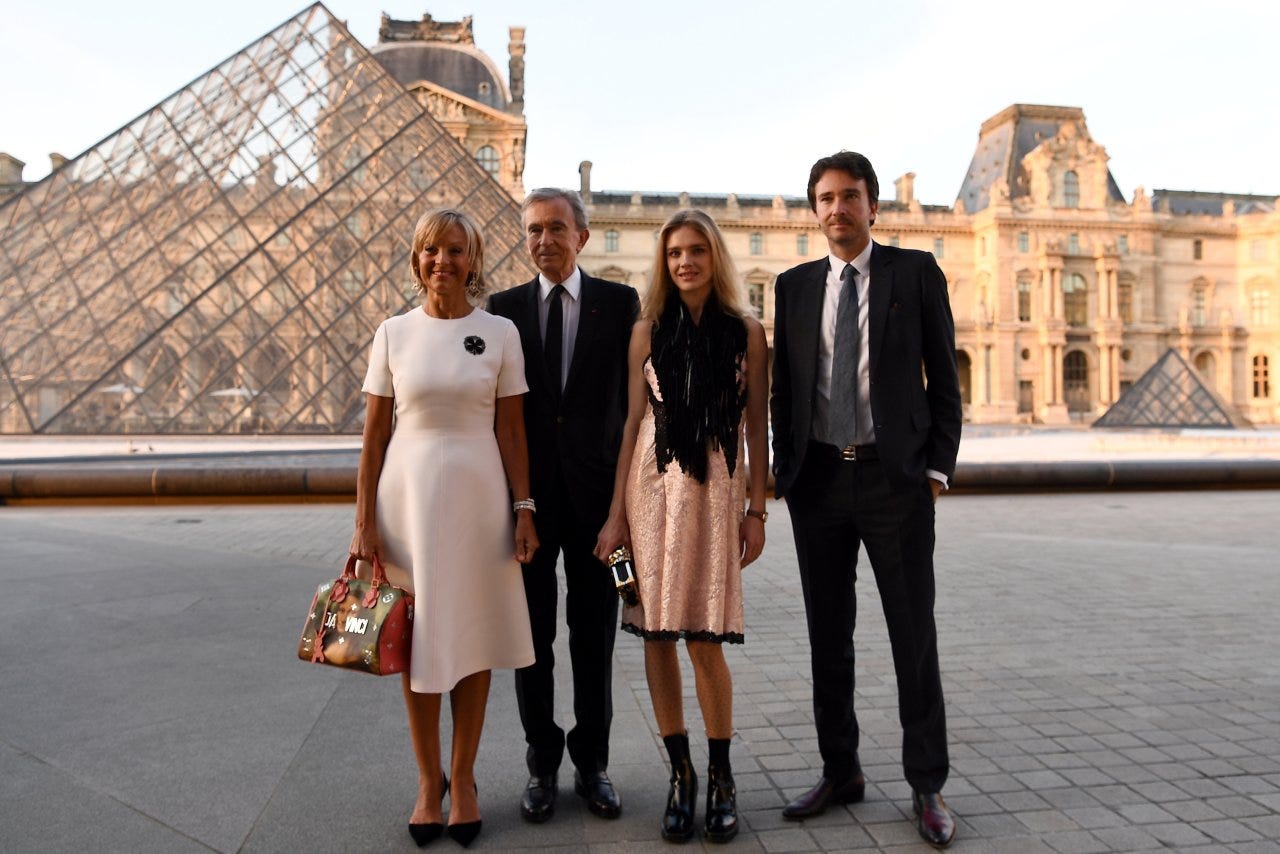
Fast forward to the big showdown: the LVMH shareholders meeting, held in the Louvre. Now, here’s where it gets SPICY. Squarcini, the head honcho of this spy show, phoned up Arnault’s secretary just as Mr. Arnault was sitting back with a glass of champagne, no doubt relishing the latest conspiracy to make journalists’ lives miserable. According to wiretaps, Squarcini told the secretary that security would prevent Ruffin and his ragtag band of ex-workers from confronting Arnault, because, god forbid, anyone actually confront the man about his company’s labor practices.
So, when Ruffin and his team showed up, they were immediately shoved into a side room, away from the grand hall where Arnault was sipping Champagne and pretending that his luxury empire didn’t run on sweatshops. Naturally, when Ruffin started protesting, the group got ejected, because why would LVMH want a couple of ex-factory workers and a journalist (with a camera) challenging them in front of the elite.
Afterward, Squarcini was all over it, asking the secretary, “Is Mr. Arnault happy?” And of course, she enthusiastically confirmed, “Oh, yes! Very, very happy!”
The Mole Who Shouted “I’m the Mole!”
But, in case you think the spying operations stopped there, buckle up. Farhat, the mole who had wormed his way in and not blended in, decided to announce himself like he was auditioning for a spy parody. At the shareholders meeting, when Arnault’s security approached him, Farhat, ever the subtle infiltrator, shouted, “I’m the mole!” Yeah, no one was surprised. Fakir promptly kicked him to the curb. That’s what you get for being the world’s least convincing spy.
But the surveillance didn’t stop. Oh, no. LVMH was in this for the long haul. Farhat recruited Marlène Mauboussin, a photographer who was, at the time, homeless, to continue the infiltration. Her mission? To snap pics and make recordings of the making of Merci Patron! (a film LVMH probably wished had never been made). You cannot make this up. Somewhere in the halls of LVMH, someone signed off on a budget that included a homeless woman with a disposable camera as part of their elite surveillance strategy. But, in a classic case of “this could only happen in real life,” the photos turned out fuzzy, and the secret recordings? Total flop. To add salt to the wound, Mauboussin, in a plot twist no one saw coming, actually became sympathetic to Fakir’s cause and ended up joining them. Talk about a redemption arc.
Money, Money, Money
So, how much did all of this cost LVMH? A cool €2 million. Out of that, €15,000 to Farhat, and €1,000 went to Mauboussin. But despite their failed spy games and fuzzy pictures, LVMH didn’t back down. Oh, no. In fact, they kicked things into high gear.
Meanwhile, Ruffin, now a Member of Parliament had long suspected he was being spied on, but it wasn’t until 2019, when reports about Squarcini’s judicial investigation surfaced, that the full extent of the surveillance hit him like a ton of bricks.
As it turns out, the LVMH spying operation lasted from 2013 to 2016, mostly centered around Ruffin and Fakir. The lengths they went to. The mental energy invested in trying to shut down one journalist’s documentary about how LVMH treats its workers like disposable luxury items.
But in 2021, after all the drama and wiretaps, the French prosecutors offered LVMH a settlement that allowed them to avoid criminal prosecution. All it took was a €10 million fine, which, when you’re the richest man in France, is like paying your bill after an overpriced lunch at L’Avenue . No harm, no foul. Arnault didn’t even have to testify in court, so he could keep his media circus at bay. Perfect. He just sat back and let the whole thing blow over like a bad summer storm. The calm, however, did not last long for Mr. Arnault as the presiding judge in the Squarcini case later ordered him to testify.
The Courtroom Circus
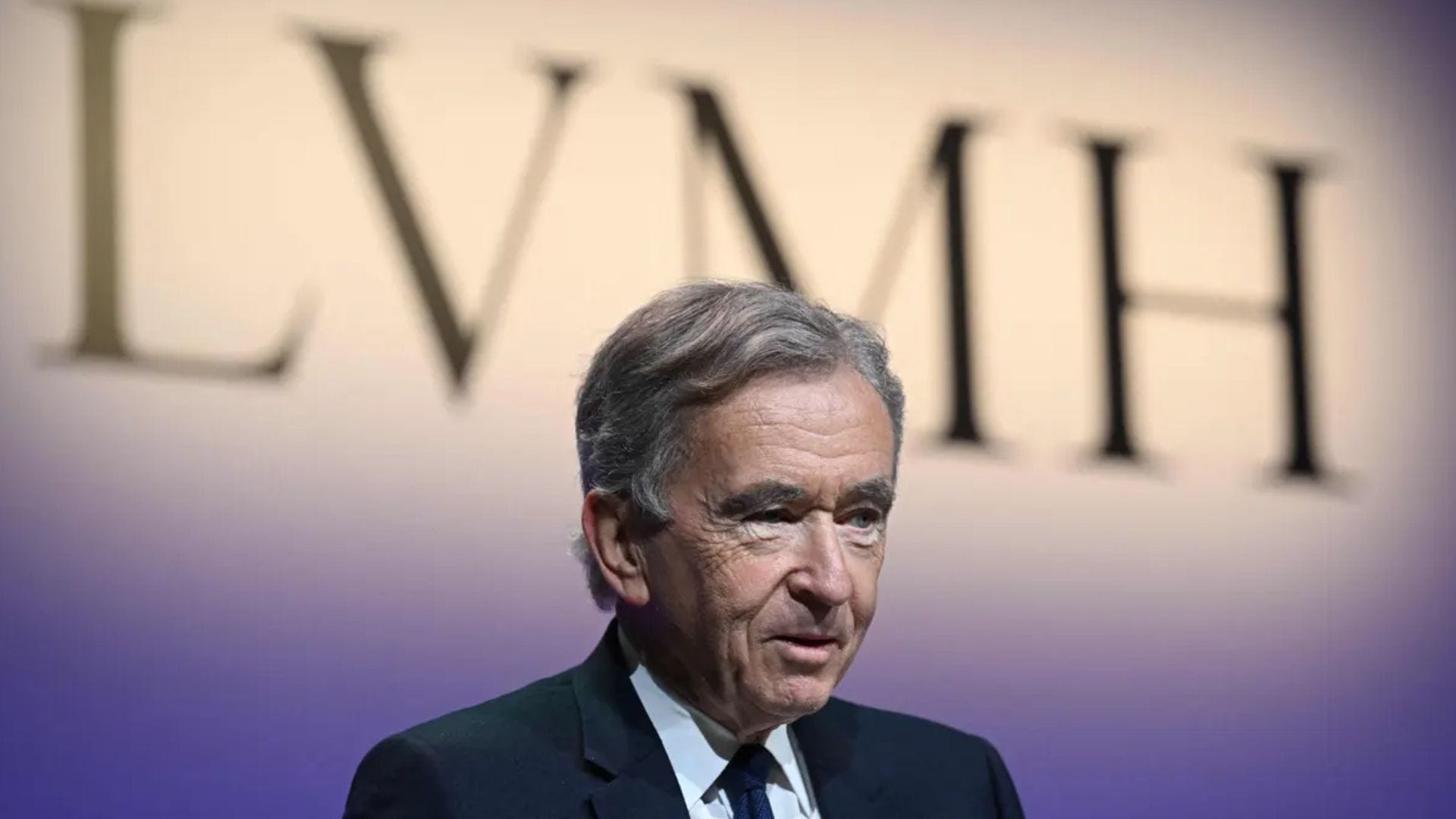
Of course, Bernard Arnault, the man whose empire includes Christian Dior, Louis Vuitton, insisted he had no knowledge of the spying. Every time the presiding judge pressed him on LVMH’s tactics—wiretaps, infiltration, intimidation—Arnault pulled the oldest CEO trick in the book: plausible deniability. "I have no memory of that." "I’m not aware of that." "That was handled by Pierre Godé." (who, conveniently, is dead.) When reminded that wiretaps revealed Arnault had been "very happy" about the surveillance, he suddenly adopted a case of courtroom-induced selective hearing. And when asked about LVMH’s commitment to press freedom, things truly went off the rails.
At one point, the prosecution brought up an incident where Arnault allegedly snatched a journalist’s microphone, dragged him aside, and threatened him. His response? "THAT IS FALSE!" Unfortunately for him, the encounter was recorded.
The Final Meltdown
As the questioning escalated, Arnault began unraveling like a poorly hemmed gown. When confronted with proof that LVMH had organized surveillance against journalists who weren’t even covering him—just a random team from France 3 Aquitaine doing a Cirque du Soleil segment—he snapped: "I don’t have to respond to these stupid ramblings!!" By the end, he was hurling accusations at the court itself, claiming he was the victim of a socio-Marxist conspiracy. It was giving “billionaire meltdown” in a way that even Elon Musk would find embarrassing.
The richest man in France, reduced to a conspiracy-ranting Facebook uncle. Meanwhile, his son Antoine Arnault, LVMH heir and reluctant crisis manager, stormed out of the courthouse, probably texting PR damage control before his father started ranting about Trotskyists.
And Yet, No Consequences
In the end, Bernard Arnault walked out of court still the richest man in France, still sitting atop the world’s biggest luxury empire, and still refusing to acknowledge that his fortune was built on corporate ruthlessness disguised as savoir-faire. François Ruffin, on the other hand, left with exactly what he wanted: proof that LVMH feared him enough to launch a multi-year espionage operation.
But here’s the thing, this isn’t just about one overzealous ex-spy and a paranoid luxury titan. The state-business surveillance of leftists in France has a long and storied history, a tradition of suppressing dissent that stretches back centuries. From the infamous Dreyfus Affair, where intelligence services fabricated evidence to maintain the conviction of an innocent Jewish officer, to François Mitterrand’s presidential wiretapping scandal in the 1980s, the French elite have always had a vested interest in keeping certain voices in check.
What LVMH did to Ruffin wasn’t new; it was just the luxury sector’s version of an old playbook. The powerful, whether in politics or business—have always treated leftist movements and journalists as threats, not just nuisances. And in that grand tradition, Squarcini, with his Rolodex of high-level government contacts, simply adapted past state surveillance tactics to corporate interests. Because in modern France, the lines between state power and business power are so blurred, they might as well be stitched together in Louis Vuitton monogram canvas.
If anything, Squarcini’s downfall wasn’t that he crossed a line—it’s that he made it too obvious.
This case proves that being a journalist in France—especially one who dares to investigate the ultra-wealthy—is a high-risk endeavor. The fact that LVMH, the world’s largest luxury conglomerate, felt entitled to deploy a full-blown espionage operation to suppress a documentary speaks volumes about the state of press freedom when billionaires are involved.
Let’s be clear: Bernard Arnault isn’t just any businessman. He is the businessman of France. He’s wealthier than the GDP of some small countries, has the ear of every politician who matters, and—most importantly, he owns a terrifying amount of the French media.
Through his holding company Groupe Arnault, he controls Les Echos, France’s leading business newspaper, and Le Parisien, one of the country’s most widely read dailies. His close ties to Le Figaro ensure that France’s conservative elite always has a sympathetic outlet, while his influence extends even into Challenges, a magazine that once criticized him but has since softened its tone significantly. And let’s not forget that he once tried (and failed) to buy Le Monde, France’s most prestigious newspaper. When that bid fell through, he settled for poaching its editor-in-chief and installing him at Les Echos instead.
Why does this matter? Because when one man, whose empire touches everything from finance to fashion, controls such a large chunk of the media landscape, it creates a chilling effect. Journalists understand that writing critically about Arnault and LVMH could mean losing access, career opportunities, or worse—becoming the target of corporate espionage. The Merci Patron! case wasn’t just about one journalist; it was about sending a message to all journalists: step out of line, and we will come for you.
And that message seems to have worked. How often do you see in-depth investigations into LVMH’s labor practices? Its tax arrangements? Its quiet monopolization of the French economy? Almost never. Because in a country where billionaires own the press and have no qualms about spying on journalists, self-censorship becomes a survival instinct. So while Bernard Squarcini might be wearing an ankle bracelet for the next two years, the real issue remains: how free can the press really be when the richest man in the country sees investigative journalism as just another problem to be eliminated?
Speaking of owning French press, did you happen to watch La Maison on Apple TV+? The big French fashion group featured in it does this kind of espionage and media control
Not surprising at all.